

Understanding the rules of the road is key in the automotive world. Every car maker or importer must go through the cmvr certification process in india. This ensures their vehicles are up to code. It’s all about keeping roads safe and protecting the environment.
Getting official approval is the first step for any car business. By following these rules, companies show they care about quality and safety. It’s not just about following the law; it’s about doing well in the market and staying successful.
Key Takeaways
- Mandatory compliance ensures vehicles meet national safety and environmental standards.
- The regulatory framework applies to all automotive manufacturers and importers.
- Securing approval is a critical prerequisite for legal market operations.
- Adherence protects both the brand reputation and the end consumer.
- Proper documentation facilitates a smoother path to commercial vehicle distribution.
Understanding the Regulatory Framework for CMVR Compliance
To meet cmvr compliance in the car world, you need to know India’s rules. These rules make sure cars are safe, green, and work well. Companies must follow these rules to sell their cars in India.
Role of the Ministry of Road Transport and Highways
The Ministry of Road Transport and Highways (MoRTH) leads car rules in India. It makes laws and standards for car design, making, and use. This helps keep roads safe and the environment clean.
Key Testing Agencies and Their Responsibilities
Testing groups check if cars follow the rules. They make sure cars are safe and work as promised. Companies must work with these groups to show their cars are good.
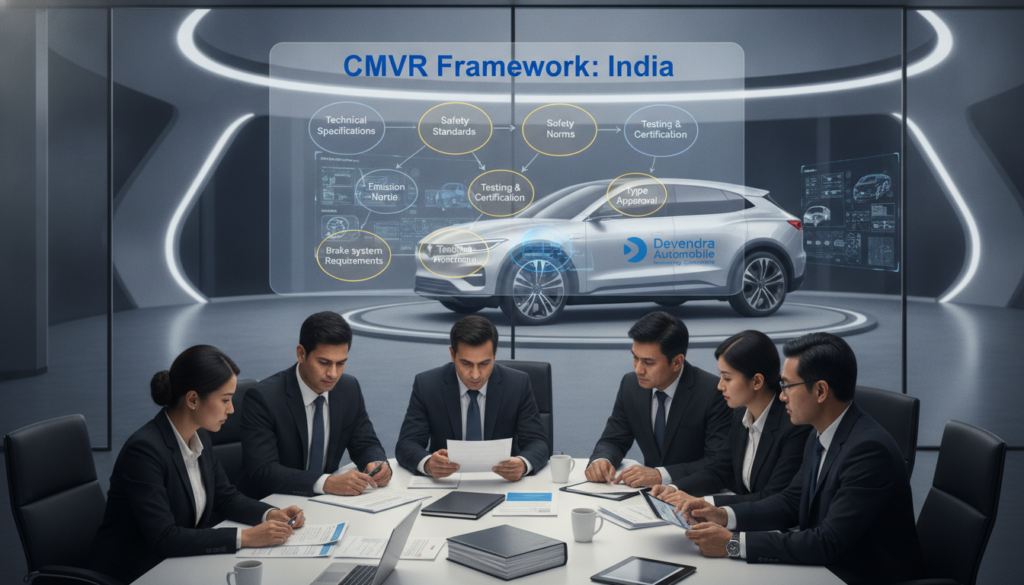
Automotive Research Association of India (ARAI)
The Automotive Research Association of India (ARAI) is in Pune. It’s key for car safety, emissions, and noise tests. Getting ARAI’s seal of approval means a car is reliable.
International Centre for Automotive Technology (ICAT)
The International Centre for Automotive Technology (ICAT) is in Manesar. It tests and certifies cars. Working with ICAT means cars meet global and local safety standards.
Essential Documentation Required for CMVR Certification
Getting your vehicle approved in India needs careful preparation of technical and legal papers. It’s key to give accurate info to avoid delays in the cmvr certification process. When your documents are right and complete, the process goes smoothly.

Technical Specifications and Vehicle Drawings
The base of your application is the vehicle’s technical details. You must give detailed blueprints, including dimensional drawings and weight data. These help check if the vehicle meets safety standards.
Engineers should make sure all technical info matches in every document. Any difference can cause your application to be rejected. High-quality documents are crucial for documents required for cmvr certification.
Compliance with Safety and Emission Standards
You must show that your vehicle meets Indian safety and environmental rules. You need certified test reports from places like ARAI or ICAT. These prove your vehicle meets emission norms and crash-test standards.
These papers are key to show you care about public safety. Without them, you can’t get cmvr certification. Make sure your test data is up-to-date and follows the latest rules.
Manufacturer Authorization and Legal Declarations
You also need legal papers to back your application. This includes a power of attorney and official authorization from the manufacturer. These prove you have the legal authority to apply for the license.
Also, you must sign declarations to confirm the truth of your documents. These legal papers are very important for documents required for cmvr certification. Being open and following the law helps build trust with the authorities.
Navigating the CMVR Certification Process in India
Knowing the cmvr certification process in india is key for car makers entering the Indian market. This process makes sure every car is safe and eco-friendly, as required by the government.
Application Submission and Prototype Selection
The first step is to apply to a testing agency. Car makers must give detailed specs and pick a prototype for testing. Choosing the right prototype is important, as it should match the car they plan to sell.
Laboratory Testing and Performance Evaluation
After the application is accepted, the car goes through tough lab tests. These tests check if the car meets certain standards. Engineers do these tests in controlled settings to get precise results.
Emission Testing Procedures
Emission tests are a big part of the evaluation. Cars are tested in controlled drives to check pollutants. Following strict emission rules is essential for approval.
Safety and Braking System Validation
Safety checks focus on the car’s strength and how well it works. Braking systems are tested to see if they work well in emergencies. This ensures the car is safe for drivers and passengers.
Review of Test Reports and Data Analysis
After testing, a detailed report is made about the car’s performance. Experts then check this data to see if it meets the rules. If there are any issues, they must be fixed before moving on.
Granting of the Type Approval Certificate
The last step is getting the Type Approval Certificate. This certificate proves the car meets all rules. With it, the maker can start making and selling cars in India.
Common Challenges and Compliance Pitfalls
Planning ahead is key to avoiding delays in getting certified. Even with clear rules, surprises can pop up. Spotting these risks early helps teams use effective mitigation strategies to keep projects on track.
Addressing Incomplete Technical Documentation
Most delays come from missing or wrong technical data. Regulators need exact drawings, material specs, and safety info to check vehicles. Precision is non-negotiable when you’re getting ready to apply.
- Make sure CAD drawings match the real prototype exactly.
- Check that material test reports are up-to-date and from accredited labs.
- Match all safety declarations with the latest government updates.
Managing Delays in Prototype Testing
Testing schedules are tight, and any test failure can cause big delays. Things like logistics, equipment setup, and lab availability can affect your timeline. Having a buffer period in your plan helps with unexpected issues.
| Challenge | Impact | Mitigation Strategy |
|---|---|---|
| Equipment Failure | High | Schedule redundant testing slots |
| Logistical Delays | Medium | Use specialized transport services |
| Calibration Issues | Low | Pre-verify instruments before arrival |
Handling Non-Compliance Issues During Evaluation
Finding a non-compliance issue doesn’t mean your project is over. It’s crucial to keep open communication with testing agencies. This way, you can understand the problem and fix it fast.
Being transparent with regulators helps solve problems together. By documenting every change and re-test, you show you’re serious about safety and quality. This way, your vehicle will meet all standards for the market.
Conclusion
Getting regulatory alignment is key for a successful car launch in India. Companies that focus on accurate technical filings have an edge. They work well with the Automotive Research Association of India or the International Centre for Automotive Technology.
Success comes from being proactive about safety and environmental rules. Staying committed to these strict standards helps protect your brand. It also makes sure every car meets top quality standards.
Building a good relationship with testing bodies makes getting to market easier. Paying close attention to details in the prototype phase avoids expensive delays. It keeps your production schedule on track.
Check your team’s compliance strategies now to stay ahead of changing rules. Talk to your certification partners to make sure your documents are up to date. Your dedication to these standards boosts innovation and safety in India’s car industry.
 Previous Post
 Next Post