
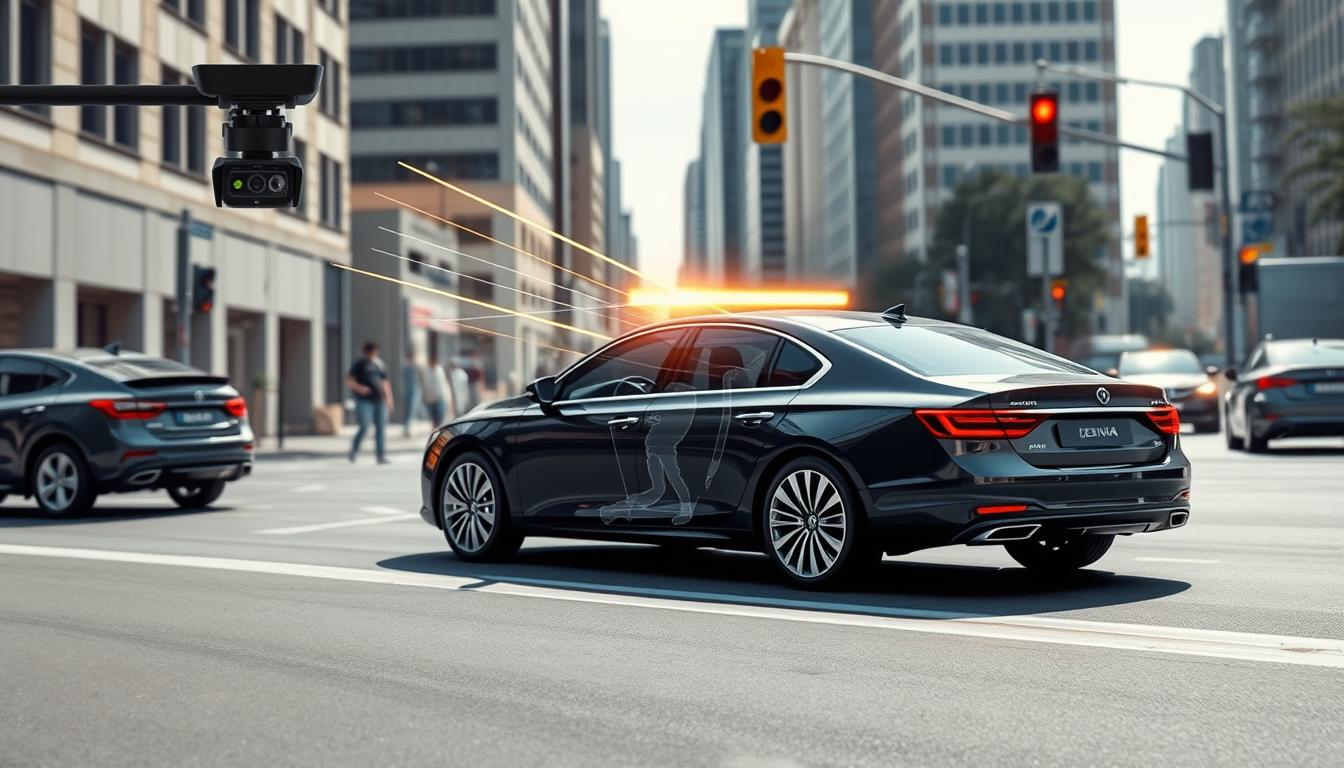
Advanced safety features in vehicles have changed how we drive. Automatic Emergency Braking (AEB) is a key technology that boosts road safety.
AEB systems use sensors to spot obstacles. They automatically apply the brakes when needed. This helps prevent or lessen collisions.
This car safety feature is made to lessen the impact of accidents. It makes our roads safer for everyone.
Key Takeaways
- AEB is an advanced safety feature that helps prevent or mitigate collisions.
- AEB systems use sensors to detect obstacles and automatically apply the brakes.
- This technology is a significant enhancement to road safety.
- AEB reduces the severity of accidents.
- It makes roads safer for all users.
Understanding Automatic Emergency Braking
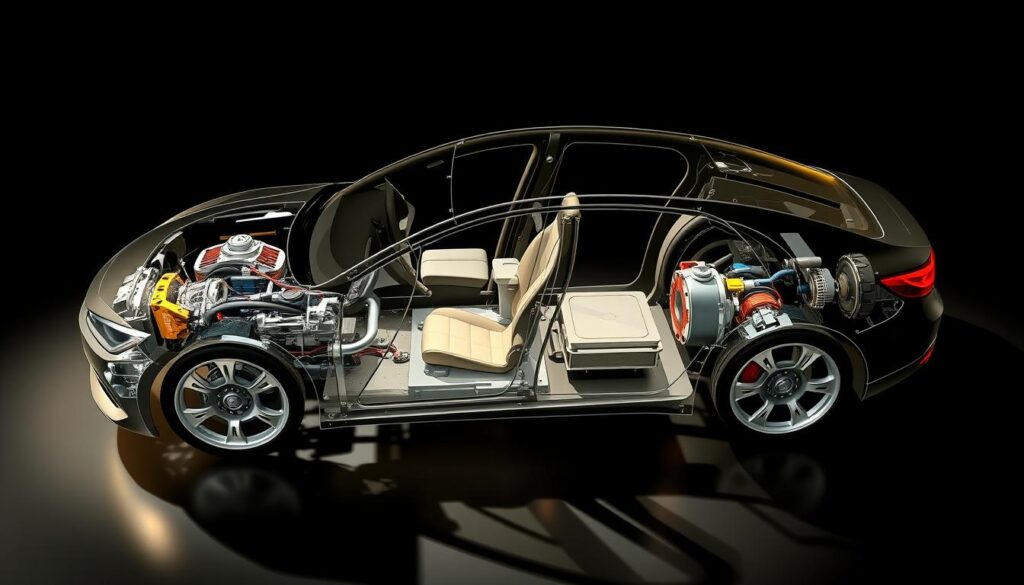
Automatic Emergency Braking (AEB) is a key part of advanced driver assistance systems. It helps prevent collisions by automatically applying the brakes when needed. This can greatly reduce or stop accidents from happening.
Definition and Core Functionality
AEB is an active safety system that uses sensors and smart software. It watches the car’s surroundings to spot other vehicles, pedestrians, cyclists, and obstacles. This helps avoid potential crashes.
The main job of AEB is to quickly analyze data from sensors like radar and cameras. If it sees a crash is likely, it can brake automatically or alert the driver to act fast.
Evolution of AEB Technology
AEB technology has grown a lot over time. At first, it mainly looked for other cars. Now, it can also see pedestrians and cyclists.
Today’s AEB systems are better at spotting dangers and acting fast. As car tech keeps getting better, AEB will play an even bigger role in keeping roads safe.
How Automatic Emergency Braking Works
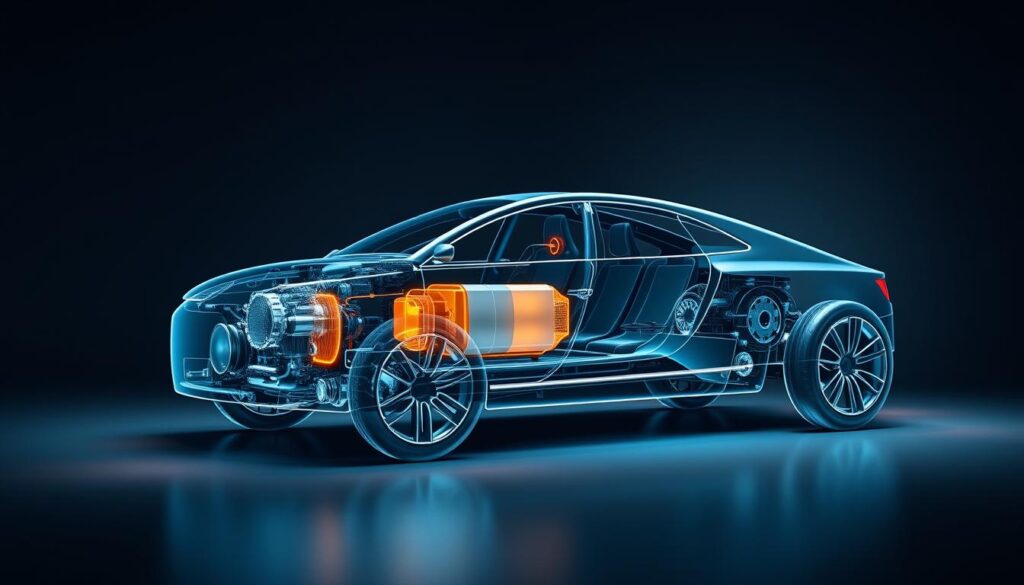
AEB systems use sensors, algorithms, and brakes to prevent or lessen crashes. This complex process involves several key parts. They work together to make roads safer.
Sensor Technologies
AEB systems use radar, camera, and LiDAR sensors. Radar finds distance and speed of objects. Cameras spot pedestrians and vehicles. LiDAR makes detailed 3D maps of the area.
Detection and Decision-Making Algorithms
The sensors send data to detection and decision-making algorithms. These algorithms check the vehicle’s speed and the objects’ distance. If a crash is likely, the system brakes to stop or lessen the impact.
“The integration of multiple sensor technologies and advanced algorithms enables AEB systems to achieve a high level of accuracy in detecting potential collisions.”
Braking Mechanism and Response Times
The braking mechanism is key in AEB systems. It stops the car quickly and safely. Modern AEB systems can stop in less than 100 milliseconds. This cuts down stopping distance and crash risk.
| AEB System Type | Response Time (ms) |
|---|---|
| Basic AEB | 150-200 |
| Advanced AEB | 50-100 |
| Premium AEB | <50 |
Understanding AEB systems shows their power to change road safety. They can greatly reduce accidents.
Types of Automatic Emergency Braking Systems
AEB systems have evolved to include a range of technologies. Each addresses unique safety challenges on the road. These systems automatically apply the brakes in emergency situations. This helps prevent or mitigate collisions.
Low-Speed AEB for Urban Driving
Low-speed AEB systems are made for urban driving where speeds are lower. They prevent collisions during stop-and-go traffic, common in cities. By automatically braking, low-speed AEB reduces the risk of rear-end collisions.
High-Speed AEB for Highway Safety
High-speed AEB systems are for higher speed environments like highways. They detect potential collisions at higher speeds and apply the brakes. This enhances safety during highway driving.
Pedestrian and Cyclist Detection Systems
Advanced AEB systems also detect pedestrians and cyclists. They use sensors and cameras to identify vulnerable road users. If a potential collision is detected, the brakes are automatically applied. This is very beneficial in urban areas where pedestrians and cyclists are common.
The following table summarizes the key features of the different AEB systems:
| AEB System Type | Primary Function | Operating Speed |
|---|---|---|
| Low-Speed AEB | Prevents collisions in urban driving | Low speeds (e.g., stop-and-go traffic) |
| High-Speed AEB | Enhances safety on highways | Higher speeds (e.g., highway driving) |
| Pedestrian and Cyclist Detection AEB | Protects vulnerable road users | Various speeds, with a focus on urban areas |
In conclusion, the diverse range of AEB systems shows significant advancements in vehicle safety technology. Understanding the different types of AEB systems helps drivers appreciate their vehicle’s safety features.
Benefits of Automatic Emergency Braking
Automatic Emergency Braking (AEB) has changed road safety a lot. It has cut down on crashes. This tech is now a key part of cars, making driving safer and more worry-free.
Collision Prevention Statistics
Research shows AEB cars crash less often. In some cases, AEB can cut crashes by up to 50%. This shows how well it works in stopping accidents.
- AEB cuts rear-end crashes by up to 40%.
- It works best in slow places like cities.
- It’s also good at high speeds on highways.
Injury Reduction in Unavoidable Crashes
AEB helps prevent crashes, but it also makes crashes less harmful. It lessens the impact of a crash, which means people are less likely to get hurt.
Key benefits include:
- Lower impact speeds mean less severe injuries.
- It also protects people like pedestrians and cyclists better.
Insurance Benefits and Long-Term Cost Savings
Cars with AEB might get insurance perks. This can save money over time. Many insurers give discounts for cars with AEB.
This means AEB is not just safer. It’s also smart for your wallet.
Automatic Emergency Braking in the Indian Context
India is getting more crowded, making safety features like Automatic Emergency Braking (AEB) very important. Adding AEB to cars is a big step towards making roads safer.
Current Adoption Rates and Availability
AEB is becoming more common in India, with many car makers adding it to their models. You can find AEB in cars from luxury brands to more budget-friendly ones. Popular car brands like Maruti Suzuki, Hyundai, and Mahindra are leading the way, making safety features more available to everyone.
Government Regulations and Safety Initiatives
The Indian government is pushing for safer cars through laws and programs. They’re thinking about making Advanced Emergency Braking a must-have feature to cut down on accidents. They’re also pushing car makers to use AEB, aiming to make roads safer for everyone.
Popular Indian Vehicles Featuring AEB Technology
Many popular cars in India now have AEB. Some top models include:
- Maruti Suzuki S-Cross
- Hyundai Elantra
- Mahindra XUV700
These cars are loved for their features and the extra safety AEB offers.
Challenges of AEB Implementation on Indian Roads
While AEB is great, it faces challenges on Indian roads. The traffic here is often busy and unpredictable, making it hard for AEB to work well. Improper road infrastructure and unpredictable pedestrian behavior also affect AEB’s performance. Car makers and the government are working together to make AEB better for Indian roads.
The future of AEB in India looks bright. With ongoing efforts to improve safety and rules, AEB will play a big part in reducing accidents and making roads safer.
Conclusion
Automatic Emergency Braking (AEB) is a key safety feature. It can greatly reduce crashes and injuries on the road. AEB uses sensors, algorithms, and brakes to stop or slow down cars before accidents happen.
AEB systems, including ones for low-speed and high-speed driving, are making roads safer. They also detect pedestrians and cyclists. This means drivers get better protection, whether in cities or on highways.
The use of AEB and collision avoidance systems is a big step forward in road safety. As cars get more AEB tech, it will help cut down on crashes. This is good news for everyone on the road.
Buying cars with AEB and supporting its use can make driving safer. AEB’s benefits are clear. Its growth is key to improving road safety in the future.
 Next Post